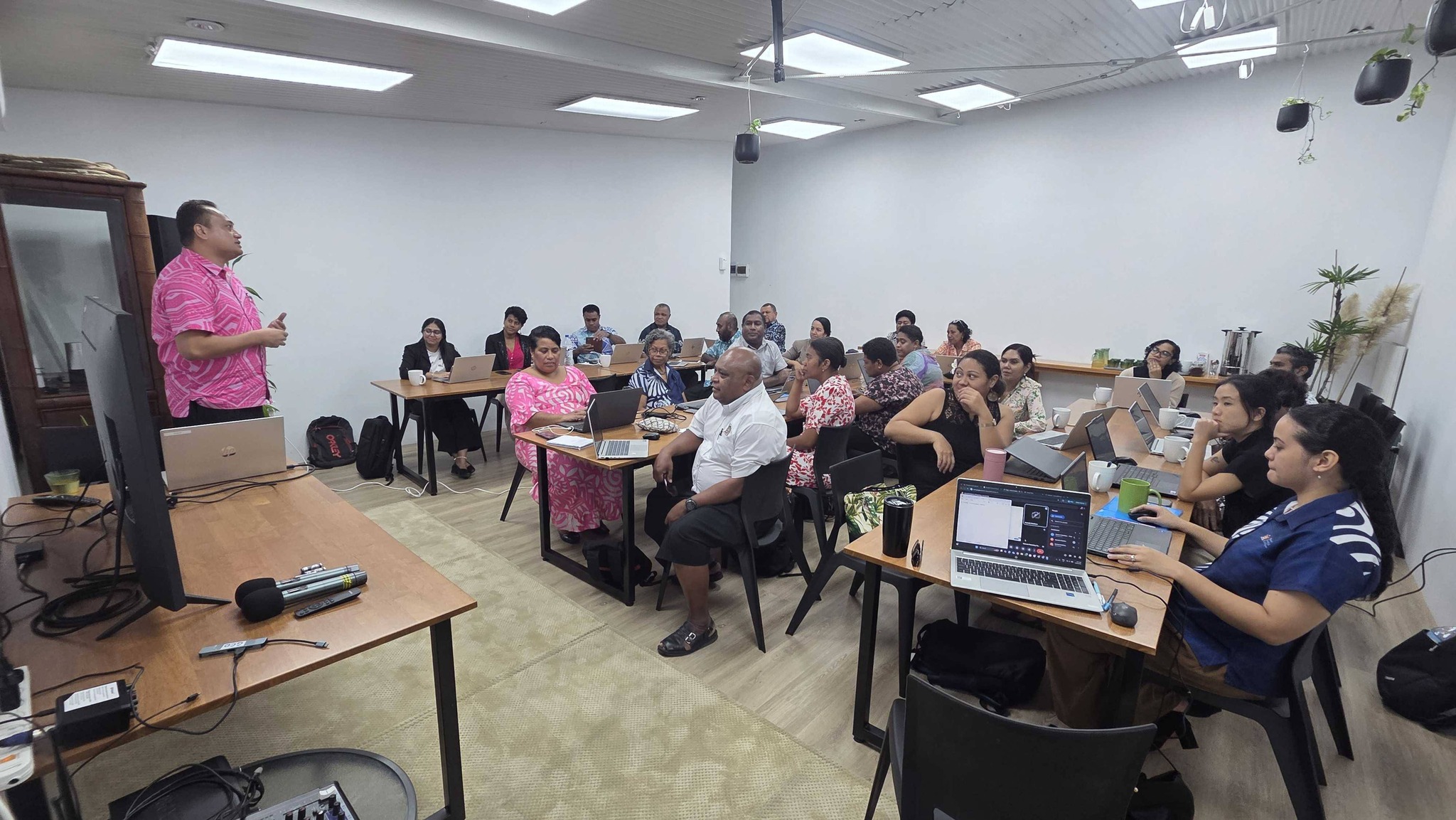
Right now, our team of fewer than 10 people is running active AI-supported projects in Australia, Fiji, Seychelles, Solomon Islands and Vanuatu. In mid May, we trained staff from Fiji’s Ministry of Tourism and Civil Aviation on the use of Artificial Intelligence (AI) in the public sector.
We can do this because we’ve rebuilt how we work before we started telling anyone else to.
While preparing for that training, we got curious about our own journey. With a few prompts in our AI tool of choice, we reconstructed Traseable’s AI journey from our team’s Slack history and built the following slide as part of our training presentation.
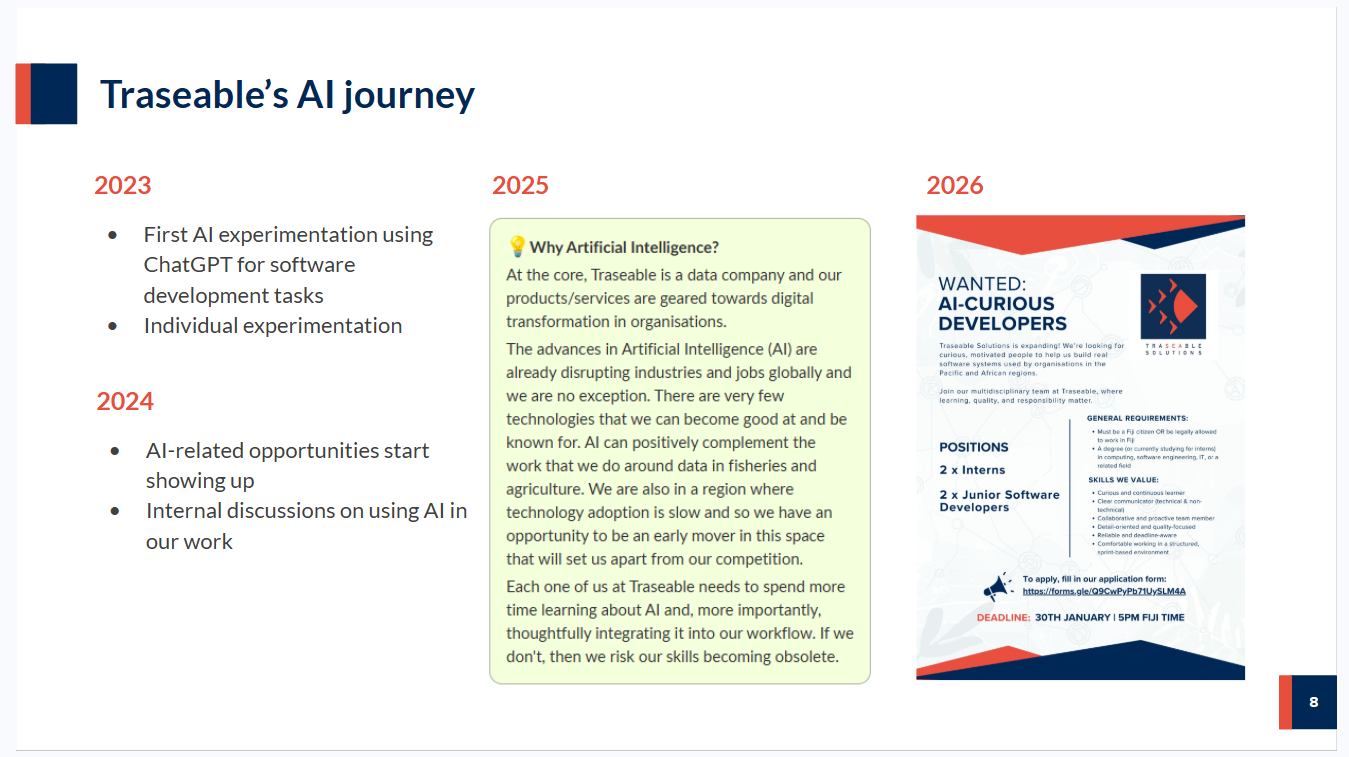
The slide shows our progression, as a niche Pacific Island tech/consulting business, from AI exploration to implementation. In 2025, we saw that the rapid advances in AI were disrupting industries globally and recognised that we, here in the Pacific, would be no different.
For public sector organisations and private businesses in the Pacific, the use of AI in the workplace will become as necessary as technologies like email.
Organisations that don’t integrate AI tools thoughtfully in their work will be less effective and businesses that don’t use it will be less competitive.
Why we’re rebuilding Traseable for the AI era and beyond
Traseable has been around for almost 9 years with a team of less than 10 people based in Fiji and a project team of Pacific Islander contractors in Samoa and the Solomon Islands. We work with government and regional agencies, international development organisations, NGOs, and private sector organisations. Often, our work involves the introduction of digital tools in remote communities and small islands where power and internet connectivity is limited and digital literacy is low.
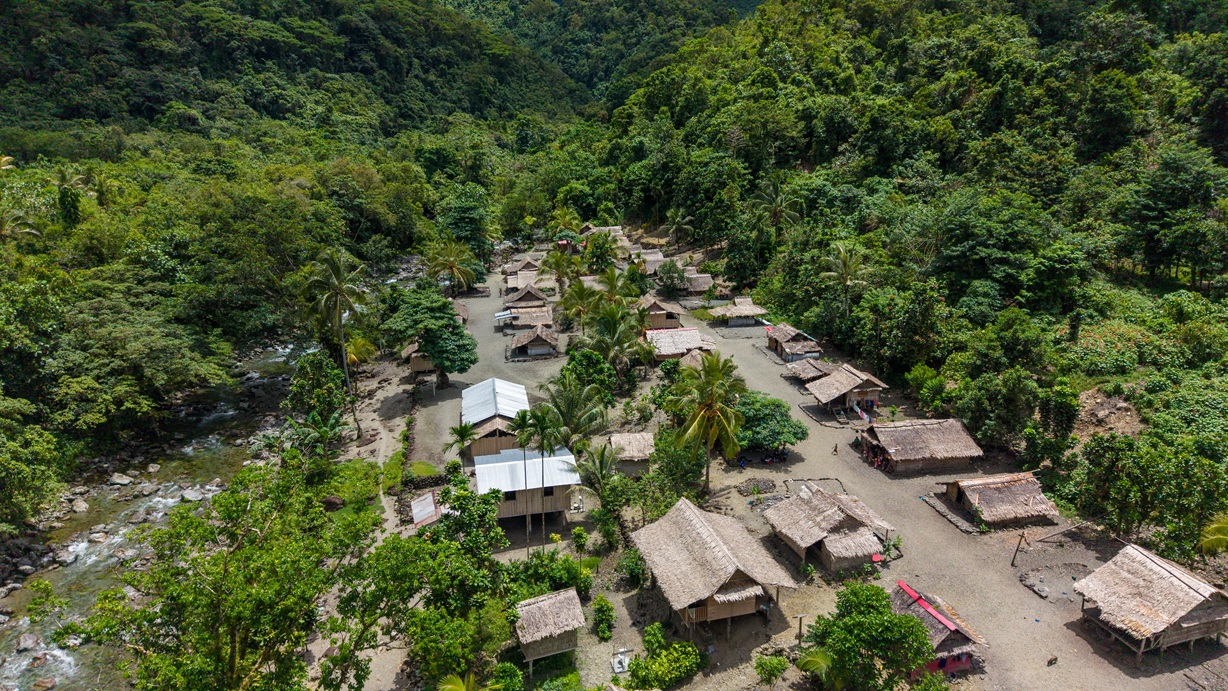
To continue our mission of facilitating digital transformation in the agriculture, fisheries, and climate/disaster resilience sectors in developing countries around the world, leveraging AI and augmenting our team with the right tools has been necessary.
How has AI changed the way we work
This year we have become more intentional in our use of AI and have committed to using AI in everything.
Here are a few ways we’re using it:
- Business development — AI agents scan global opportunities weekly and flag the ones that fit our work. Our projects team review the highlighted opportunities then use various AI tools to support the market research and proposal drafting that follow.
- Project management — AI agents connected to our internal project monitoring tools help our team stay on track by posting project status reports to our team Slack every Monday, Wednesday, and Friday.
- Software development — work that took us 3 months now only takes a month. During a 2-day validation workshop for Fiji’s Risk Profiling Methodology we’re supporting, our team identified a need: participants at the follow-on piloting workshop would need a digital tool to do the activities and better understand the methodology. We saw the need on Tuesday, built the tool on Wednesday, tested it Thursday, and workshop participants were using it on Friday. That pace, from problem to working tool in 4 days, in the field, is what AI has changed for us. The speed matters less than what it lets us do — respond to a real need the moment we see it, instead of months later.
Every new hire into our team has to have AI skills and knowledge. Job roles within our team are evolving too — in practice, that means we’re reviewing all our position descriptions and updating them to reflect a new work environment with AI.
What could AI adoption mean for the Pacific?
If a small team like ours can use AI to extend our reach across projects in many countries, imagine the possibilities if others in the Pacific were to do the same.
Unlike with previous “transformative” technologies, the growing connectivity and decreasing Internet costs in the Pacific region coupled with increasing global pressure could be a catalyst for the Pacific to think and act strategically about AI. There is a window of opportunity for us to shape this technology in the region. The alternative is to wait and let decisions and products made elsewhere happen to us in the Pacific.
Based on our experiences, AI adoption within organisations must come from the recognition that work is changing very quickly and that work processes, technology, and skills must change too. To remain relevant, effective, and competitive, organisations in the Pacific need to change.
These are things we think deeply about as we’ve built our reputation helping other organisations transform through the use of digital technology.
This adoption of AI and transformation starts with education. This is why we’re sharing our knowledge and experiences with public and private sector organisations to learn how to use AI safely and effectively — not based on theory and YouTube videos, but from real experience in the Pacific.